

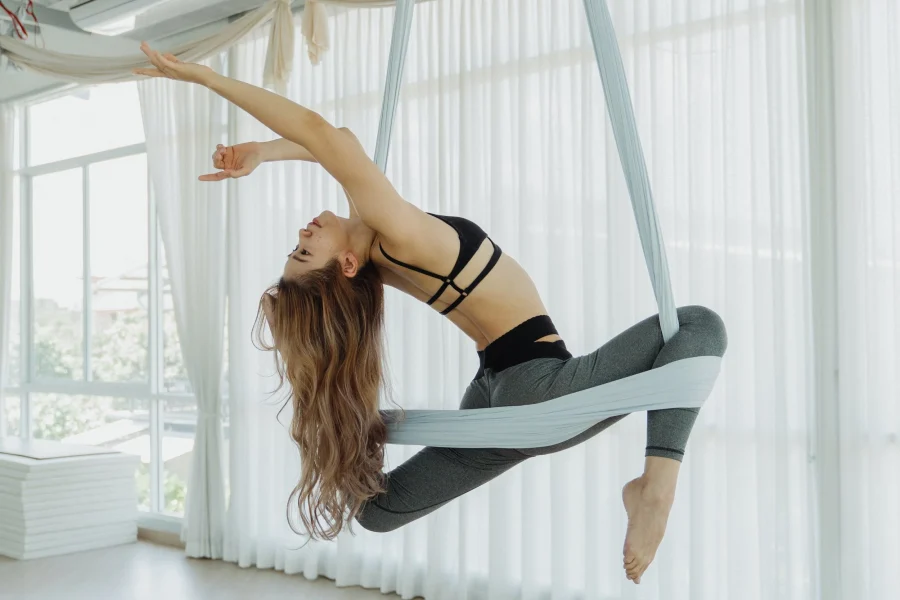
Many workplace team-building activities reward speed, competition or extroversion. These formats may energise some employees while making others feel exposed. Aerial yoga offers a different experience: participants learn an unfamiliar movement skill, use equipment and support one another without requiring a winner.
When companies arrange aerial yoga events, the activity should be framed as optional, accessible exploration rather than a test of bravery. Thoughtful planning around class level, privacy, health screening and group size is essential because suspension and inversion create specific demands.
Novelty Can Reset Team Roles
In ordinary work, employees know who leads, presents or has technical authority. A new physical activity places everyone in a learning environment.
This can create humility and lightness, but only if mistakes are normalised. The event should not invite colleagues to judge who learns fastest or performs the most dramatic pose.
Cooperation Does Not Require Competition
Team-building is often organised around winning. Aerial practice can create shared attention through listening, equipment setup and encouragement instead.
Participants remain responsible for their own hammock and movement. Colleagues should not physically assist or change another person’s wrap unless the instructor explicitly directs a safe exercise.
Participation Must Be Voluntary
Some employees may have medical restrictions, fear of heights, religious concerns or simple lack of interest. They should be able to decline without explaining themselves.
Attendance should not affect workplace reputation or performance perception. Providing a parallel activity or social role can maintain inclusion without pressure.
Beginner Design Matters
A corporate group may include people who have never practised yoga or used suspended equipment. The event should begin with low hammock heights, feet-supported movement and clear exits.
Complex drops and advanced inversions have no place in a general team session. Success can mean learning basic fabric handling and one or two controlled supported poses.
Inversion Should Remain Optional
The visual appeal of aerial yoga often centres on upside-down shapes, but not everyone is comfortable or medically suited to inversion.
A well-designed event offers upright and supported alternatives that still use the hammock meaningfully. Employees should not be encouraged to invert for photographs or group approval.
Group Size Affects Instructor Attention
Suspension requires equipment checks and close observation during new transitions. A large group may need additional instructors or separate sessions.
Companies should not maximise attendance at the expense of supervision. The venue and provider can recommend a safe capacity based on equipment spacing and activity complexity.
Rigging Capacity Is Non-Negotiable
Hammocks must be attached to verified structural points using equipment suitable for the intended loads. An ordinary office ceiling is not automatically capable of supporting suspension.
Events are usually better held at a purpose-equipped studio. Temporary office installations require professional assessment and should never rely on visual assumptions about beams or fixtures.
Privacy and Clothing Need Clear Guidance
Employees may feel physically visible in an aerial class. Pre-event information should explain suitable clothing, coverage and jewellery removal without requiring tight or revealing outfits.
No photography should occur without specific consent. People who agree to a group photograph may not consent to inversion footage or public social media use.
Psychological Safety Shapes the Event
Fear, balance and body confidence vary. Public teasing, forced partnering or comments about flexibility can quickly undermine trust.
The instructor and organisers should use non-competitive language and allow quiet participation. Managers have a responsibility not to turn visible caution into a joke.
Aerial Practice Can Encourage Communication
Participants need to listen carefully to fabric setup, hand position and exit instructions. Asking questions becomes part of safe participation.
This can model useful workplace behaviour: clarify uncertainty before acting. However, the lesson should remain implicit rather than becoming a forced corporate metaphor after every exercise.
The Event Is Still Physical Training
Although the atmosphere may be playful, grip, trunk and hip muscles work. Employees may feel fatigue or soreness afterwards.
The event should include gradual preparation and recovery. Scheduling it immediately before physically demanding work or a critical late meeting may be unsuitable.
Health Information Requires Discretion
The provider may need to communicate general contraindications and ask participants to seek medical guidance where appropriate. Employees should not disclose diagnoses publicly.
Private contact with the instructor or provider is more suitable. The company should avoid collecting medical information it does not need.
Managers Should Participate Carefully
When senior leaders attend, employees may feel pressure to join or attempt harder variations. Managers can model listening and modification rather than fearlessness.
They should avoid turning the class into a performance assessment. The goal is a shared voluntary experience outside normal tasks.
Catering Should Fit the Activity
A large meal immediately before inversion may be uncomfortable. If food is provided, timing and portion should allow digestion.
Water should be available, particularly after travel in Singapore’s humidity. Alcohol should not be part of a pre-class event because it affects judgement and balance.
Transport and Timing Influence Accessibility
An off-site studio should be reasonably reachable from the workplace or transport links. Travel time needs to be included in the protected event window.
Employees should not be expected to return urgently to work while sweaty or fatigued. Changing time and facilities are part of the schedule.
Plan for Different Access Needs
Accessibility begins before anyone enters a hammock. Organisers should ask the provider about step-free access, changing facilities, seating, sensory conditions and alternatives for employees who cannot use the apparatus.
Do not promise that every movement can be adapted for every condition. Instead, share accurate venue information early and let people make private, informed choices. A meaningful alternative should receive the same time and respect as the main event.
Confirm the Emergency Process
The company and provider should know who manages an incident, how first aid is accessed and how emergency services would reach the venue. Participant contact details and workplace reporting should be handled according to established privacy procedures.
This planning should remain in the background during the event. Its purpose is readiness, not creating anxiety.
Team Building Should Not Replace Workplace Improvement
An enjoyable event cannot solve conflict, workload or poor management. Presenting it as a cure for team problems may feel dismissive.
Team building is most credible when the organisation also addresses roles, communication and psychological safety directly. Aerial yoga provides shared experience, not organisational repair.
Gather Feedback Without Public Pressure
Anonymous feedback can ask whether instructions were clear, options felt genuine and the event was enjoyable. Organisers should also ask non-participants whether the alternative was appropriate.
Success should not be measured only by photographs or inversion numbers. Accessibility and voluntary engagement are better indicators.
Choose a Provider With Group Experience
When discussing an event with Yoga Edition, companies can clarify participant numbers, prior experience, equipment, class duration and inversion options. The provider should explain how the session will be adapted.
A clear brief helps balance novelty with safety. Team-building value comes from the quality of the shared experience, not from maximum difficulty.
Create a Memorable Experience Without Coercion
Aerial yoga can offer Singapore workplaces a creative alternative to competitive games. Participants learn unfamiliar skills, manage uncertainty and share moments of progress.
The event succeeds when employees retain choice, privacy and suitable support. Novelty becomes valuable because it is handled thoughtfully, not because people are pushed beyond their boundaries.
Frequently Asked Questions
Is aerial yoga suitable for all employees?
No activity suits everyone. Medical restrictions, fear, mobility and personal preference must be respected, with genuine alternatives available.
Should corporate aerial events include inversions?
Inversions can be optional for suitable participants, but upright hammock work should remain a complete and valid experience.
Can aerial hammocks be installed in an office?
Only after professional structural assessment and appropriate installation. Ordinary ceiling fixtures should never be assumed safe.
What should employees wear?
Comfortable fitted-enough clothing that covers the underarms and backs of the knees is often practical. Provider instructions take priority.
How long should a team event last?
The session may run around sixty to ninety minutes, with extra time for briefing, changing and travel. Group needs determine the schedule.
Should the company take photographs?
Only with specific consent. Participation in the event does not automatically permit photography or promotional use.
